Genetics & mouse models
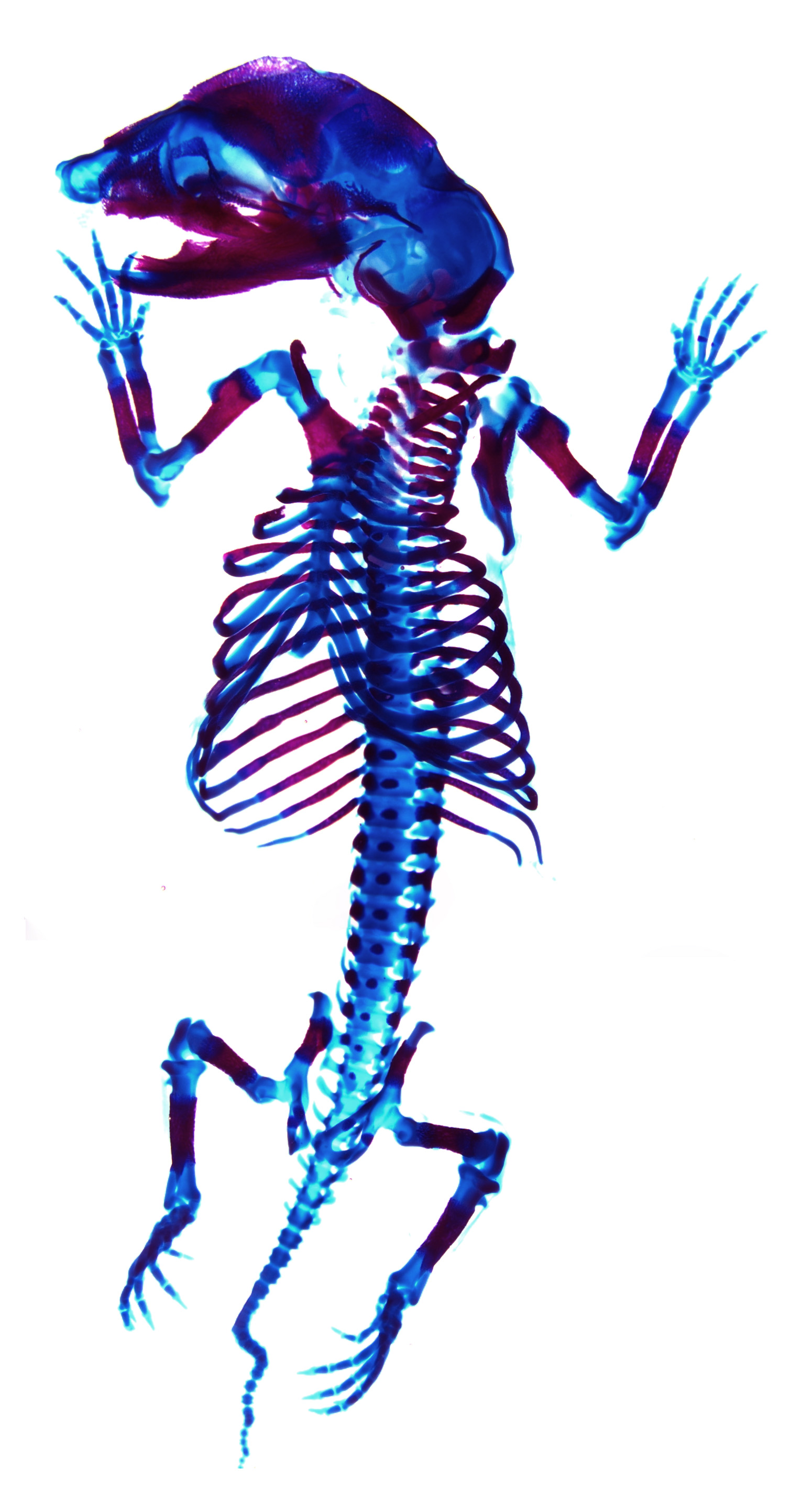
Tissue- and time-specific genetic perturbations to test how developmental pathways shape postnatal cartilage organization and long-term joint health.
 The Rux Lab investigates how developmental mechanisms shape
the structure and function of our joints and influence their
health throughout life. Our research focuses on understanding
how the specialized tissues of synovial joints form, mature,
and maintain their organization, with particular emphasis
on articular cartilage.
Although the basic architecture of our joints is established during embryonic development, many features essential for lifelong joint function emerge during postnatal growth. We seek to uncover the molecular and cellular mechanisms that guide this maturation process and determine how their disruption contributes to joint degeneration and osteoarthritis.
Using mouse genetics, developmental biology, advanced imaging, and molecular approaches, we investigate how key developmental signaling pathways, including Hedgehog signaling and HOX transcription factors, regulate joint formation and articular cartilage organization.
Our overarching goal is to understand how healthy joints are built so that we can better understand why they fail. By connecting developmental biology with joint health and disease, our research aims to identify fundamental mechanisms that support cartilage integrity and inform future strategies for joint repair and regeneration.
Tissue- and time-specific genetic perturbations to test how developmental pathways shape postnatal cartilage organization and long-term joint health.
Quantitative tissue phenotyping, molecular localization, and spatial analyses to connect signaling activity with tissue structure and function.
Bulk and single-cell transcriptomic approaches to map pathway states across development, maturation, and homeostasis.
We investigate the developmental mechanisms that establish the mature zonal architecture of articular cartilage. Our published work demonstrated that primary cilia, cell-surface organelles involved in morphogen signaling and mechanotransduction, are essential for postnatal cartilage organization and tidemark patterning, potentially through their regulation of Hedgehog signaling. Our ongoing research directly tests the role of Hedgehog signaling in establishing functional cartilage architecture and examines how its disruption during maturation and homeostasis influences long-term joint health.
Superficial zone chondrocytes (SZCs) have been studied primarily for their roles in joint lubrication and as potential progenitors, yet their broader contributions to articular cartilage health remain largely unknown. Our research investigates how SZCs develop during postnatal growth, acquire distinct molecular and functional properties, and interact with underlying chondrocyte populations to maintain cartilage organization and function. By defining the developmental and functional characteristics of SZCs, we aim to identify mechanisms that protect cartilage and inform future therapeutic strategies targeting this population.
The Hox genes are evolutionarily conserved transcription factors essential for skeletal patterning during embryonic development. Our previous work demonstrated that Hox11 genes are expressed throughout embryonic joint development, postnatal articular cartilage maturation, and into adulthood, suggesting roles beyond their established functions in skeletal patterning. However, their specific functions in joint development and maintenance remain unknown. Our ongoing research investigates how Hox genes regulate synovial joint formation and whether they contribute to joint maintenance and responses to injury.